Do you provide a COA (Certificate of Analysis) for peptides?

Short answer: yes. For every manufactured lot we can provide a batch-specific Certificate of Analysis (COA). This article explains what a COA is, which tests you’ll usually see on a peptide COA, how we produce and verify them, and step-by-step instructions for requesting and interpreting a COA for research use only.
What is a COA (Certificate of Analysis)?
A Certificate of Analysis (COA) is a document that records the laboratory test results for a specific production lot or batch of material. Think of it like a lab report for that vial or bottle. The COA ties an individual lot number to numerical test results, pass/fail statements, and the methods used to generate those results.
Two definitions up front:
Lot/Batch: the specific group of material produced together and given a unique number. It’s the identifier on the COA. Assay: the laboratory procedure used to measure something, for example purity or identity.
For peptides, COAs are batch-specific. A COA for one lot does not automatically apply to another lot with a different number. That’s why you should always check the lot number on the COA against the lot number on your product or order.
Why COAs matter for research
Scientific work depends on traceable materials. A COA gives you traceability: you can show reviewers, collaborators, or auditors the exact tests run on the sample you received. That matters for reproducibility and for documenting reagent quality in a methods section or lab notebook.
COAs also let you assess whether a material meets the specifications you expect. For example, an HPLC (high-performance liquid chromatography) purity result helps you decide whether a batch is acceptable for your assay. We frame this discussion strictly as research-use considerations. COAs are not safety approvals and do not license human administration.
Common items you’ll find on a peptide COA
Most peptide COAs include similar categories of information. Below are the fields and a short note on what they mean.
Product name and sequence: the peptide name and amino acid sequence when applicable. Lot / batch number: the unique identifier you must match to your vial. Manufacture and expiry dates: when the batch was made and the recommended expiration for unopened material under stated storage conditions. Physical description: appearance (e.g., white powder), color, and form. Purity: usually given as a percent area from HPLC. Example: 96.7% by HPLC. Identity: confirmation that the compound is the target peptide, typically by mass spectrometry (MS). Mass spectrometry is a method that measures molecular mass and can confirm the expected mass-to-charge ratio (m/z). Impurities / related substances: area or percent of major impurities detected by HPLC or MS. Water content: sometimes measured by Karl Fischer titration; reported as percent water. Residual solvents: measured by gas chromatography (GC) when solvents are used in manufacture. Bacterial endotoxin: measured in endotoxin units (EU) using the LAL (Limulus amebocyte lysate) test. LAL is an assay that detects endotoxin from Gram-negative bacteria. Sterility / microbial limits: for batches that are released sterile, a sterility test result or a total aerobic microbial count may appear. Analytical methods: the exact methods used (e.g., HPLC method ID, MS instrument), including acceptance criteria. Analyst and date: who performed the tests and when. Certificate signature or authorization: a signed or digitally certified statement that the COA is valid for that lot.
How we test and produce COAs at PeptideXM
We combine in-house QC for routine assays and external accredited laboratories for specialized testing. For identity and purity, we run HPLC and mass spectrometry. HPLC separates components in a mixture and reports relative area percentages. Mass spectrometry confirms molecular weight and, where needed, fragment ions that match the expected sequence.
For endotoxin, we use the LAL assay. For sterility or microbial enumeration we either run validated in-house methods or send samples to an ISO 17025-accredited lab. ISO 17025 is an international standard for testing laboratories that demonstrates technical competence.
When a product requires additional characterization, such as residual solvents or water content, we include those test results and the method used. The COA will list the instrument model, method ID, and acceptance criteria so you can reproduce the test conditions if needed.
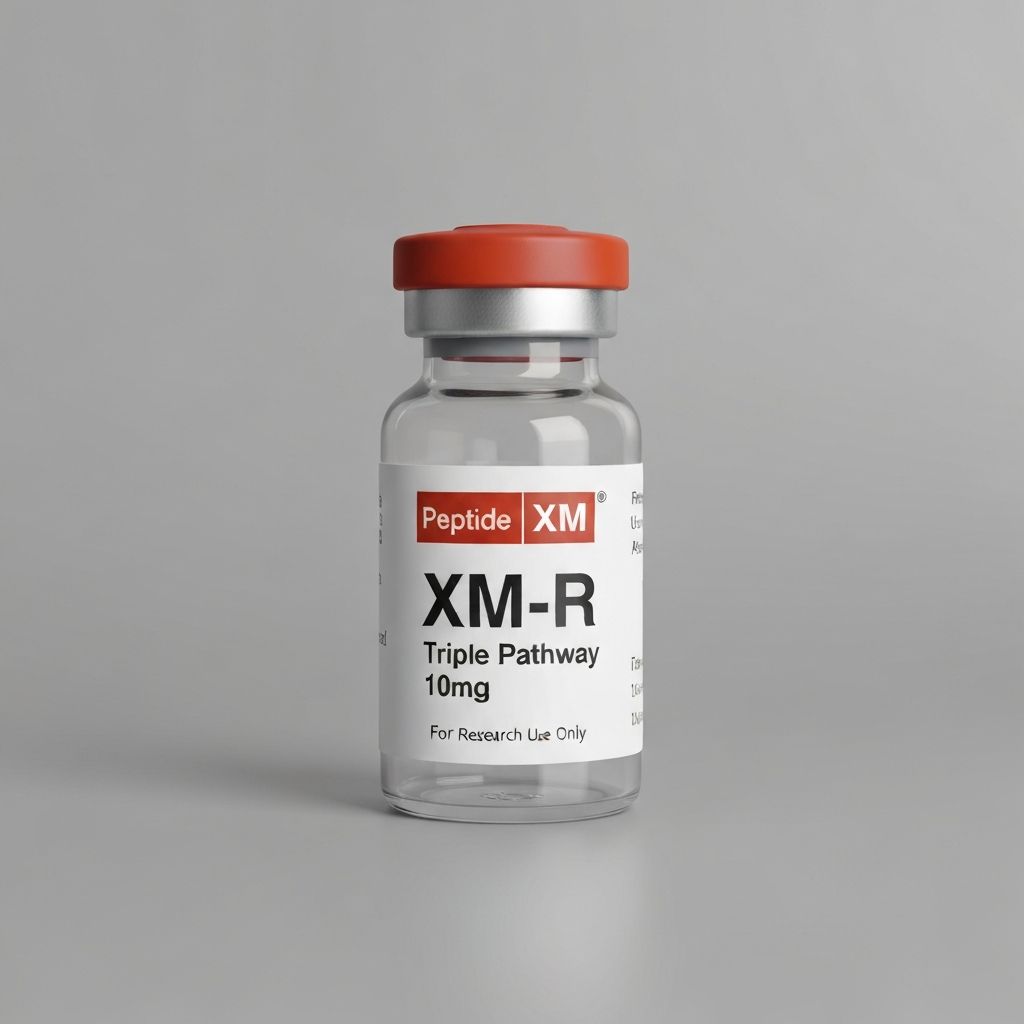
As an example of a product that receives batch-specific COAs, see the triple-pathway GLP-1 research peptide listed below. The COA for a given lot of this product includes HPLC purity and MS identity.
How to request and receive a COA (step-by-step)
Requesting a COA is straightforward. Use the steps below to get the correct document tied to your lot.
Check the product page. Many items have a COA link near the product description or a download on your order page. Locate the lot number on your vial or shipment label. You’ll need it for step 3. Submit a COA request via your account, order page, or our support email. Provide the product name, lot number, and order number. We will attach the COA as a PDF. The document is batch-specific and includes test dates and methods. If you need a stamped/hard copy or chain-of-custody documentation for an audit, indicate that in your request. Additional paperwork may add processing time.
For some commonly ordered peptides we publish COAs on the product page so you can download them before purchase. For custom or newly produced lots we’ll provide the COA after manufacture and release testing are complete.
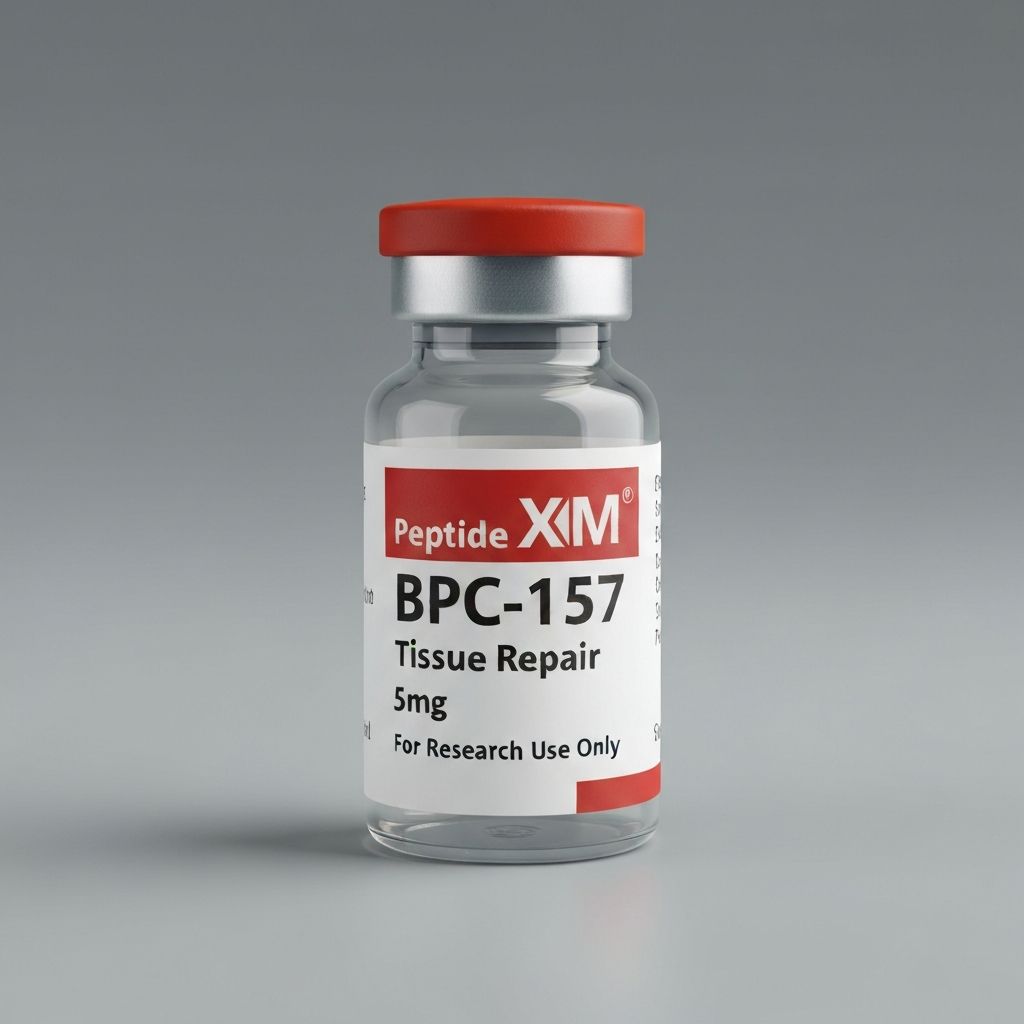
Example: if you ordered a research batch of BPC-157, provide the lot number and we’ll return the COA that matches that lot.
How to read and interpret common COA results
Here are practical notes for the most commonly reported entries. Definitions and concrete interpretation guidance follow. All interpretation is for research-use decisions only.
HPLC purity (percent area): HPLC reports peaks. The main peak area divided by total area gives percent purity. If a COA lists 95.2% purity, the main peak accounts for 95.2% of the chromatogram area under the method specified. That does not measure absolute identity; it measures relative abundance under those chromatography conditions. Mass spectrometry identity: the COA will list an observed m/z (mass-to-charge ratio) and the expected m/z. A match supports correct molecular mass. Some reports include MS/MS fragment ions for sequence confirmation. Impurity profile: the COA may list the largest impurities with retention times and relative areas. This helps you evaluate whether impurities are known side-products or unknowns. Endotoxin (EU/mg): endotoxin units per milligram. Lower values are better for cell-culture or in vitro assays sensitive to endotoxin. The COA will list the method and limits. Sterility: often reported as Pass/Fail or as microbial counts (CFU/g). Note the sampling method and whether the test was performed on the final packaged product.
Concrete example reading: "HPLC purity 97.3% (method HPLC-02); MS observed m/z 1234.6 (expected 1234.6); Endotoxin <0.1 EU/mg (LAL)." That tells you the batch shows a clean main peak by HPLC, identity matches by MS, and endotoxin is below the stated detection limit. For methods, always read the method ID; different HPLC gradients or detectors can change area percentages.
Troubleshooting: what to do if results don’t match your expectations
If the COA or the physical product doesn’t match what you expect, follow these steps for a quick resolution.
Confirm the lot number on your COA matches the lot on your vial or shipment label. Take clear photos of the vial label, packaging, and COA if you already received a COA but suspect a mismatch. Contact our support team with the order number, lot number, and photos. Describe the discrepancy: wrong sequence, unexpected appearance, or out-of-spec test result. We will place the lot on hold and initiate an internal review. Options include re-analysis, provision of raw chromatograms/spectra, replacement of the lot, or refund depending on the outcome. If you require additional testing (for example, orthogonal identity confirmation), we can arrange third-party analysis. That may add time and cost.
Keep a small sample of the material in its original container until the case is resolved. That preserves chain-of-custody and helps with any re-testing.
Final practical notes and limitations
COAs document the state of a batch at release under specified testing conditions. They are not certificates of suitability for any particular biological application. Storage, handling, and subsequent freeze-thaw cycles can change a material’s properties after release. Always store according to the product instructions and document storage in your lab records.
Not every single test is performed on every product. For example, some small-molecule impurities or trace residuals may not be tested unless part of the release criteria for that product. If you need a specific test that is not on the COA, request it when you place the order or after receipt; we can often provide additional testing or a custom COA for research projects.
If you need a COA for grant reporting, an institutional audit, or internal QA, include the lot number and request any supplementary documentation (method SOPs, analyst initials, instrument calibration logs). We can provide what’s appropriate for research-use documentation.
We aim to make COAs accessible, transparent, and tied to a clear chain-of-custody so researchers can document reagent quality. For any COA-related request, contact our support team and include the product name and lot number so we can respond quickly.
COAs are a tool. Use them to support reproducible research and traceability. They do not validate clinical use.