Does GHK-Cu Affect Me? A Researcher's Guide to Uses and Evidence
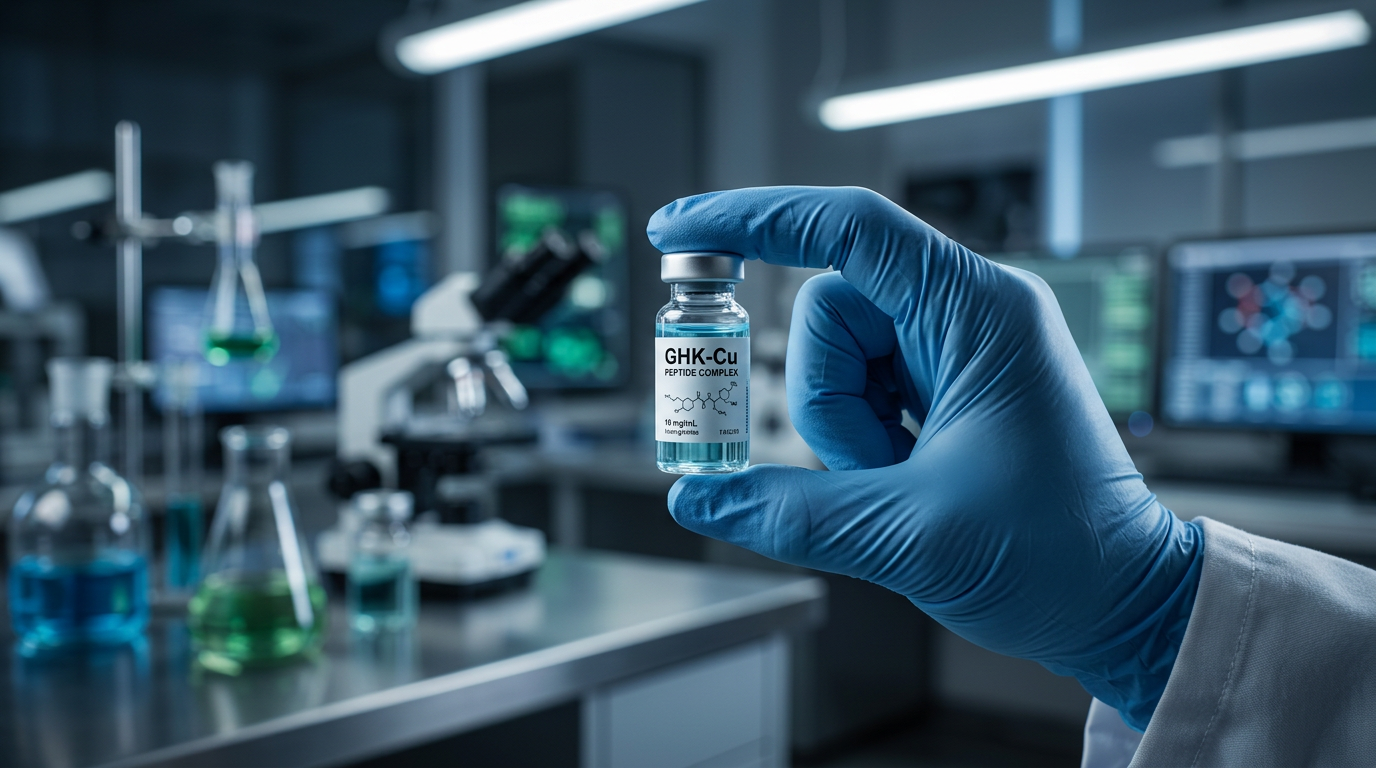
A junior postdoc in a dermatology lab pulled a culture plate from the incubator and frowned. Fibroblasts treated with a low-concentration peptide looked markedly different from controls: more spread, more collagen staining. The peptide on the bench was GHK‑Cu, a tiny copper-binding tripeptide that keeps turning up in wound-healing and skin-aging literature. That moment — a stark visual change in a dish — is where most newcomers first ask whether GHK‑Cu could have an effect on them. This piece unpacks what researchers actually know, what remains uncertain, and how labs study the molecule.
What is GHK-Cu? GHK‑Cu is a three–amino-acid peptide (glycyl-L-histidyl-L-lysine) complexed with a copper ion. It's naturally present in human plasma, saliva, and urine at low concentrations, and it binds copper with high affinity. In research reports the peptide appears under a few spellings — GHK, GHK‑Cu, or ghk cu. The copper complex is the form most commonly studied because the metal alters the peptide's biochemical activity.
Brief history: how researchers stumbled on it The peptide was first isolated from human plasma in the 1970s during efforts to identify small factors that influenced tissue repair. Early animal and cell studies showed GHK (with copper) promoted wound healing and increased collagen synthesis. Over the following decades, molecular biology and microarray tools expanded the view: GHK‑Cu interacts with many cellular processes, not just collagen production. The narrative moved from an anecdotal wound-healing agent to a molecule studied for gene modulation and tissue maintenance.
Molecular structure and basic chemistry GHK is composed of glycine-histidine-lysine. The histidine side chain provides a binding site for copper(II), forming a stable GHK‑Cu complex. That copper center is important: it participates in redox chemistry and can transfer between proteins or small-molecule chelators in biological fluids. The complex's small size helps it penetrate extracellular spaces in tissue models and interact with cell-surface receptors and enzymes.
How GHK‑Cu appears to act at the cellular level Over the past two decades, studies have converged on a few recurring themes. GHK‑Cu:
modulates gene expression in multiple cell types affects extracellular matrix synthesis and degradation influences inflammatory and antioxidant pathways promotes cell migration and angiogenic signals in wound models
None of these observations implies a therapeutic claim. They describe reproducible laboratory findings across cell-culture and animal models.
Gene expression effects: what the microarrays show One widely cited line of work used gene-expression profiling to measure how human cells respond to GHK‑Cu. Those studies reported changes in the expression of thousands of genes — upregulation of some extracellular-matrix and repair-associated genes, downregulation of certain matrix-degrading enzymes and inflammatory mediators. For example, fibroblast cultures exposed to GHK‑Cu showed increased transcripts for collagen type I and III in some assays, along with altered expression of metalloproteinases and their inhibitors. The magnitude and direction of changes depend strongly on cell type, experimental concentration, and assay timing.
Preclinical evidence by application area Researchers have assessed GHK‑Cu across several experimental endpoints. Below are typical findings from animal, ex vivo, and cell studies — presented as reported effects in model systems, not as clinical recommendations.
Wound healing (animal and ex vivo): Accelerated closure in some rodent models, improved granulation tissue formation, and enhanced re-epithelialization in skin explant assays. Skin and matrix biology (cell culture): Increased collagen and glycosaminoglycan synthesis in dermal fibroblasts; modulation of MMP/TIMP balance in several reports. Hair follicle studies: In ex vivo follicle cultures and some animal work, GHK‑Cu has been associated with signals linked to hair growth cycles and follicular health. Anti-inflammatory and antioxidant endpoints: Reduced markers of oxidative stress and lower expression of selected inflammatory cytokines in certain in vitro assays.
The consistency is modest. Some labs see clear effects at particular concentrations; others report minimal or mixed responses when experimental conditions differ.
Typical experimental uses and protocol considerations New researchers often want practical guidance. Below are common experimental setups and important caveats to keep results interpretable.
In vitro cell culture: Reported effective concentrations vary. Many studies use low-nanomolar to micromolar ranges (for example, roughly 0.01–1 μM) depending on readout and cell type. Time courses range from hours (for signaling events) to days (for matrix deposition). Ex vivo skin or follicle assays: Topical or media-supplemented applications are used to assess tissue morphology, collagen staining, or hair shaft elongation over days to weeks. Small-animal models: Wound models typically apply peptide topically or via local injection and monitor closure rates, histology, and gene expression.
Key experimental controls and tips:
Include vehicle and peptide-free controls. Simple, but often skipped. Control background copper availability. Serum and media contain proteins that bind copper; the presence or absence of supplemental copper can change outcomes because ghk cu can chelate copper from the medium. Monitor peptide stability in formulation. Proteases in serum or tissue can degrade short peptides quickly; time-zero and time-course QC are useful. Use orthogonal readouts. Combine histology, biochemical assays (e.g., collagen quantification), and gene expression to build a stronger case.
Practical lab handling, storage, and quality control As a small peptide with a metal ion, GHK‑Cu requires straightforward but specific handling:
Store lyophilized product at −20 °C or lower and keep it desiccated. Avoid room-temperature storage for long periods. Reconstitute with sterile water or buffer under aseptic conditions. Prepare aliquots to avoid repeated freeze-thaw cycles. Short-term aqueous solutions are typically kept refrigerated; freeze aliquots for long-term storage. Validate purity and identity with HPLC and mass spectrometry when possible. Certificate-of-analysis information is important for reproducibility across labs.
For reconstitution, many labs use bacteriostatic water when sterility and multiple aliquots are needed.
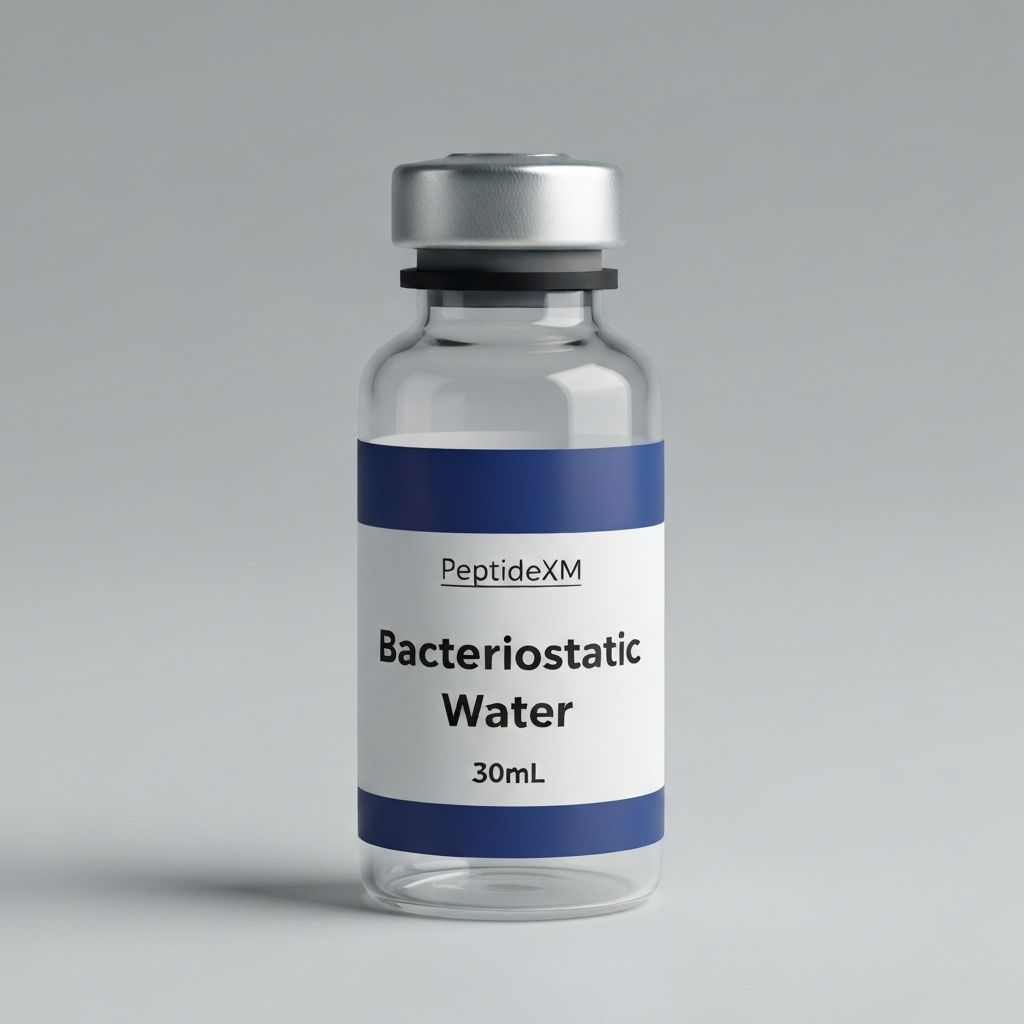
Wear appropriate PPE and follow institutional biosafety procedures. Handle all research peptides as laboratory reagents — label clearly and store under locked conditions per your lab's policies. Never use research-grade peptides in humans; these products are for in vitro and animal research only.
Selecting material and experimental design: what to look for Not all preparations are equal. For replicable research, consider these quality attributes:
Purity: prefer HPLC-reported purity ≥95% and a matching mass spec trace. Analytical data: request and retain the COA, HPLC chromatogram, and MS (or MS/MS) data. Formulation details: lyophilized peptide sold as the copper-complex vs. free GHK will behave differently. Know which form your supplier provides. Batch consistency: use the same lot for an entire study when possible, or include lot as a variable in analysis.
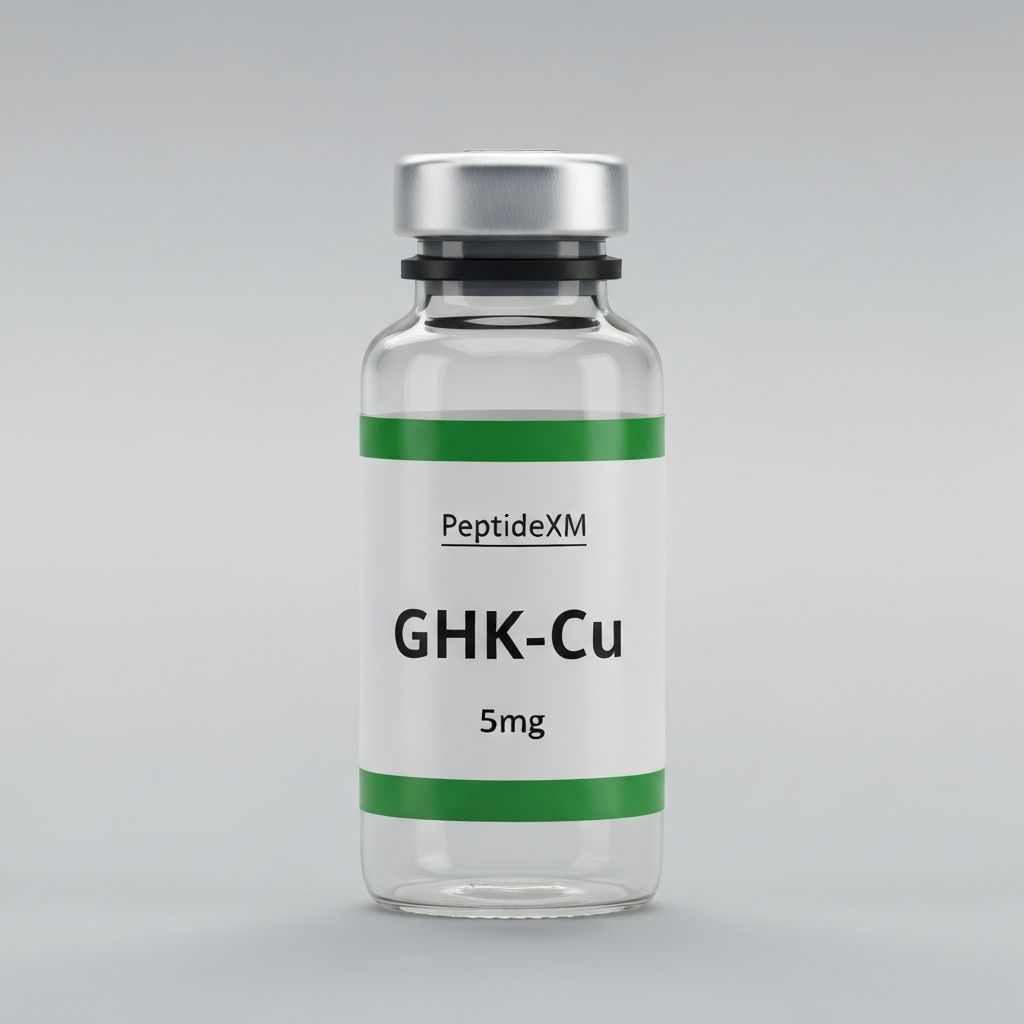
When using a commercial research-grade product in an experiment, document the exact slug, lot number, and COA in your methods. For labs that want a ready-to-order research peptide, validated options exist.
Limitations, open questions, and how to interpret results GHK‑Cu is well studied in basic models, but several limitations deserve attention.
Translatability: Effects seen in cell culture or rodents do not automatically translate to humans. Differences in copper homeostasis, extracellular matrix turnover, and immune responses complicate extrapolation. Dose and context dependence: Small peptides often show biphasic responses. A concentration that stimulates collagen synthesis in one cell type may have no effect or an opposite effect in another. Medium and formulation effects: Serum proteins, metal chelators, and proteases in biological matrices alter the effective concentration and stability of GHK‑Cu. Explicitly report media composition and any copper supplements. Mechanistic gaps: Although gene-expression surveys and biochemical assays point to multiple pathways, the precise receptor interactions and downstream signaling nodes remain incompletely mapped in many contexts.
Design studies to address these gaps. Use dose–response curves, time-series sampling, and complementary endpoints. Pre-register key experimental details when possible and include negative results in method sections so other labs can reproduce the conditions.
For newcomers: a concise checklist before you run experiments Practical, quick. Keep this checklist in your protocol folder.
Confirm peptide identity and purity via COA. Decide whether to use GHK or GHK‑Cu and document the form. Plan concentration ranges spanning low-nanomolar to low-micromolar for cell work, unless prior literature suggests otherwise. Control copper levels in media; consider parallel arms with and without supplemental copper. Aliquot reconstituted peptide and minimize freeze-thaw cycles. Include vehicle, serum-free (if relevant), and positive-control conditions in each experiment. Record lot numbers, storage conditions, and any deviations from SOPs.
These steps won't guarantee a positive result. They do improve interpretability.
Closing note — back to the lab bench That postdoc's fibroblasts told a clear story: a visual change in morphology and stronger collagen staining, reproducible across a small series of wells. The takeaway for researchers is practical. GHK‑Cu produces measurable effects in cells and animal models under controlled conditions. How those observations relate to a particular human experience is not something research-grade literature can answer directly. If your plan is to study GHK‑Cu, design tight, well-documented experiments, control for copper and proteolysis, and report the full methods so others can follow the same trail.
Research use only: This article discusses laboratory evidence and experimental considerations. It does not provide medical advice or recommendations for human use. All peptides referenced are intended for in vitro or animal research per supplier terms.