What to look for in a peptide supplier: a practical buyer’s checklist

Research use only. This post describes vendor selection criteria for laboratories; it does not recommend human use, dosing, or clinical treatment. Short answer up front: insist on accessible analytical data, clear traceability, reproducible handling guidance, and a cold-chain capable logistics plan. Everything else flows from those four demands.
Certificates and analytical data: the non-negotiable evidence Buyers should treat a Certificate of Analysis (COA) as the product’s primary identity card. A supplier that can’t or won’t provide a current COA for each lot should be excluded from consideration. Key items to expect on a COA:
Identity test: mass spectrometry (MALDI-TOF, ESI-MS) with observed m/z matching theoretical values within instrument tolerance. Purity profile: analytical HPLC trace with solvent and column details, and an integrated main-peak area percent. Impurities: information on related sequence variants, deletion products, and major side-products where relevant. Residuals and safety analytes: TFA, acetonitrile, residual solvents reporting by GC, and endotoxin (when applicable). Physical report: appearance (lyophilized vs solution), weight, net mass, and lot number.
How to read a COA quickly Don’t scan—verify. Match the sequence on the COA to the sequence you ordered. Check the MS for the expected monoisotopic or average mass and note whether the COA includes adducts or salt forms.
HPLC purity: expect a percent area; many research peptides are supplied at ≥85–95% depending on complexity. Ask what peaks were integrated and whether the reported purity is area- or weight-normalised. MS: confirm the charge states reported and whether the spectrum shows the primary species as dominant—satellite peaks can indicate truncated synthesis. Endotoxin and residual solvents: these are often absent unless requested, so confirm whether tests were performed or are available as an add-on.
Purity, identity, and naming conventions Purity numbers alone are misleading without context. A reported 98% purity by HPLC is good—if the 2% impurity is a bioactive analogue it matters a lot. Names and prefixes also carry meaning; know what you ordered.
Salt forms: TFA salts, acetate salts, and free base forms change mass. COAs should specify counter-ions and whether reported mass is for the peptide or the salt form. Modifications: acetylation, amidation, PEGylation, and lipidation must be clearly annotated and shown on analytical data. Sequence accuracy: vendors sometimes use shorthand or internal codes. Always cross-check the amino-acid sequence text on invoices and COAs.
Synthesis methods and manufacturing scale How a peptide is produced affects impurity profiles, scalability, and lead time. Know whether your supplier uses solid-phase peptide synthesis (SPPS), recombinant expression, or outsourced contract manufacturers.
SPPS: typical for short to mid-length peptides. Expect stepwise coupling and side-product patterns (deletions, oxidations). Recombinant: used for longer proteins or peptides that require complex folding. Purity metrics and host-related impurities (host cell proteins, DNA) become relevant. Batch vs. made-to-order: stock items reduce lead time; custom sequences will incur minimum order quantities (MOQs) and longer timelines.
Storage, stability, and formulation data A supplier should provide validated storage conditions and accelerated stability data for each product. Vague statements like “store refrigerated” are insufficient for reproducible research logistics.
Lyophilized vs solution: lyophilized peptides generally have longer shelf life. If supplied in solution, ask for formulation details, preservatives, and stability at 4°C and −20°C. Accelerated stability: look for data points at common time intervals (1, 3, 6, 12 months) and at elevated temperatures if the manufacturer provides them. Reconstitution guidance: basic solvent recommendations are useful for workflow planning; they should be phrased as lab handling notes, not clinical instructions.
Traceability, lot control, and retention samples Traceability prevents mystery failures. A good supplier assigns unique lot numbers, maintains searchable batch records, and retains samples for investigation.
Lot records should link COAs, raw material certificates, operator logs, and instrument IDs for critical tests. Retention samples: confirm the supplier keeps a refrigerated/lyophilized sample from each lot for a defined period (commonly 1–3 years). Change control: ensure the vendor documents process changes that could affect product consistency and that they notify customers when changes occur.
Regulatory and legal considerations for research customers Suppliers must be clear about the legal status of their products and the permitted uses. That clarity protects your lab from import or compliance surprises.
Research-only labeling: items sold for research should carry explicit “For Research Use Only” (RUO) or similar statements on invoices and product pages. Controlled substances and scheduled compounds: reputable vendors will flag restricted items and provide guidance on paperwork or licensing requirements. Export/import: ask whether the supplier handles customs documentation and whether any items require import permits or special declarations.
Packaging, cold chain, and shipping practices Cold-sensitive peptides demand predictable logistics. A single overnight delay can compromise an entire lot, so scrutinize shipping claims and validation.
Packaging materials: insulated shippers, adequate dry ice, and validated chill packs for 2–8°C shipments. Temperature monitoring: ask whether shipments include data loggers or temperature indicators for high-value orders. Carrier options: overnight ground vs. air, weekend delivery policies, and contingency plans for weather or customs delays.
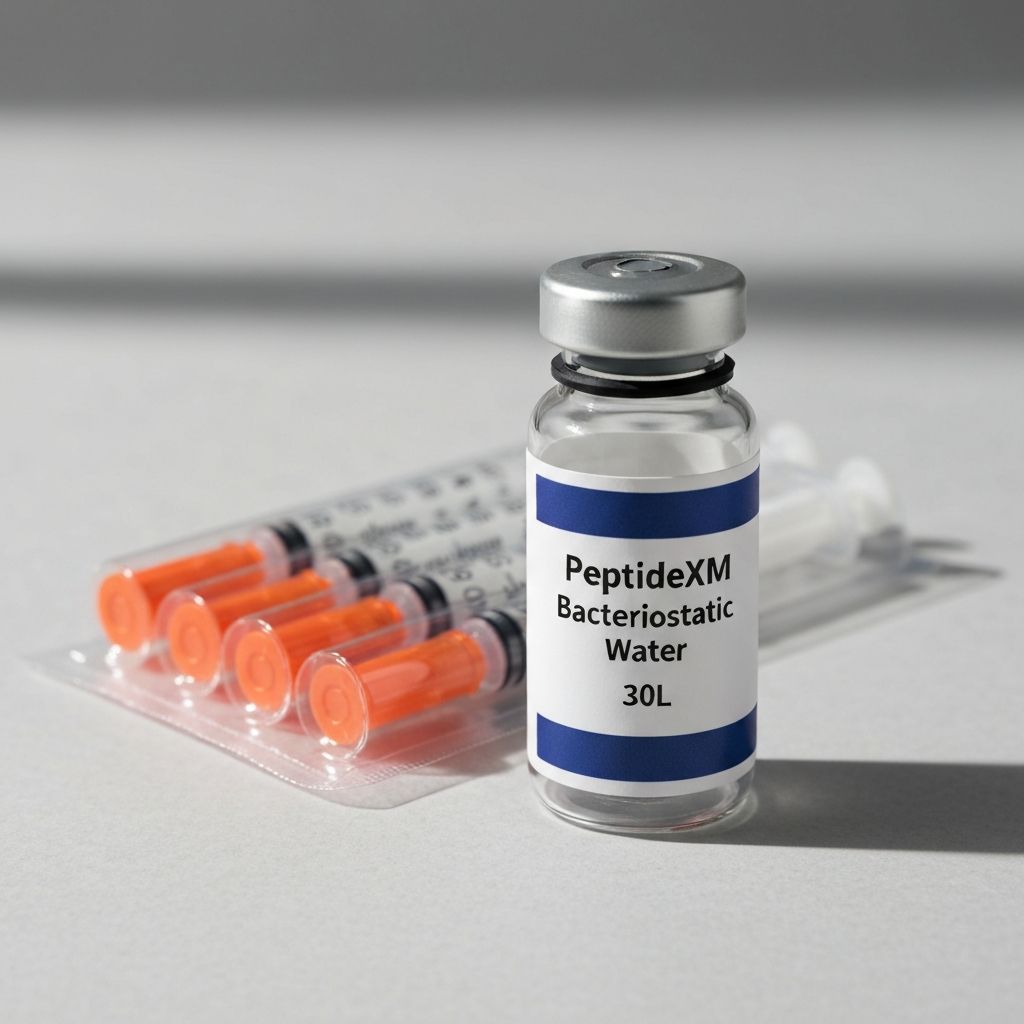
Practical extras to check on the vendor’s product page or accessories catalog:
Customer support, technical resources, and reproducibility tools Technical responsiveness predicts how smoothly a project will run. A prompt, technically competent contact is worth more than marginal cost savings.
Accessible data: product pages should host COAs, SDS, peptide maps, and handling notes as downloadable files. Application notes and SOPs: look for cell-culture compatibility notes, stability protocols, and suggested assays. They should be framed as starting points for research, not prescriptive protocols. Scientific staff: vendors with PhD-level technical support or an applications lab typically handle complex queries faster and more accurately.
Quality standards and audits Quality systems vary. ISO or GMP certifications carry different meanings depending on where they’re applied. Ask targeted questions rather than accepting a banner claim at face value.
ISO 9001: indicates a quality-management system but does not equate to GMP manufacturing for biologics. GMP vs. research-grade: GMP production implies stringent documentation and process controls—useful for translational programs but often unnecessary for basic research reagents. Audit willingness: vendors who allow client audits or provide third-party audit reports demonstrate higher transparency.
Pricing structure, lead times, and returns policy Price per milligram is only one input. Synthesize a total-cost view that includes lead time risk, testing options, and return or replacement terms.
Cost drivers: peptide length, modifications, purity level, and special tests (endotoxin, sterility) raise price and lead time. MOQs and scale pricing: small labs often pay a premium for low-quantity, custom sequences. Ask if the supplier offers intermediate purities as a cost-saving option for pilot experiments. Return policy: clarify acceptance criteria. Many vendors accept returns only for confirmed analytical non-conformance documented within a short window after receipt.
Common red flags when vetting suppliers Some warning signs are obvious. Others are subtle but meaningful.
No COA available before purchase. Vague storage or stability statements—no data provided. Reluctance to share lot-specific analytical data or raw spectra on request. Unclear legal status of products or refusal to discuss export/import requirements. Customer service that cannot connect you with a technical specialist within one business day for analytical or formulation questions.
Choose a supplier that treats analytical transparency and traceability as baseline capabilities, not add-ons. That simple filter will prevent most downstream problems and keep your experiments reproducible and auditable.